

Security for NGOs
Why NGOs Need Cyber Security?
Many institutions worldwide have started working with NGOs to stop cyberattacks and disruptions caused by cyber threats.
This resulted in a global response to the international call for collective action against cyber threats and attacks on humanitarian nonprofit and non-governmental organizations (NGOs).
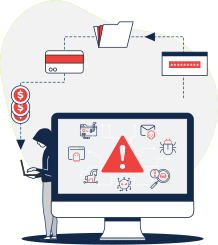
Cyber researchers observed that most nation-state actors continue to focus operations and attacks on (NGOs) for various objectives, one of which is Fraud. It usually combines spear phishing and identity theft to deceive NGOs into completing wire transfers.
As part of a hacking strategy known as CEO Fraud, fraudsters create fake business email addresses and assume the identities of executives or reliable workers to dupe them into authorizing unlawful wire transfers of money.
Another type of attack is ransomware for financial gain, where an attacker encrypts crucial data in a computer system, some of which risks getting destroyed. As a result, organizations have no choice but to pay a ransom.
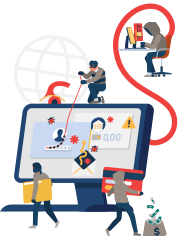
In a nutshell, cyberattacks on NGOs may be carried out for the following reasons:
- Preventing them from carrying out their activities.
- Gaining access to data on beneficiaries and other stakeholders.
- Stealing funds, data, and financial information.
- Use stolen data in disinformation campaigns.
- Use the organization's infrastructure to attack and perform malicious activities online and hold it accountable, due to identified cybersecurity vulnerabilities.
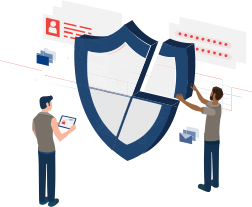
Numerous cyberattacks occur because hackers exploit weaknesses in systems or because of 'Human Error'.
Although attacks are getting more sophisticated, not every NGO can afford to hire dedicated cyber security staff. Non-Governmental Organizations (NGOs) should invest in Cybersecurity Awareness trainings and follow best practices to make their organizations more resilient to cyber attacks.